What gap should a fire door have?
Get a priceDown the sides and across the top, aim for about 3mm. Anything from 2 to 4mm is normal on a door that is hung well.
The bottom gap is the one people argue about. It comes from the test evidence for that particular door, so there is no single number. Plenty of doors are happy with up to about 10mm. A door fitted with a smoke seal or a drop-down seal may be allowed far less, and the manufacturer's data sheet settles it.
A pound coin does the job
A pound coin is roughly 3mm thick. Slide one into the gap. It rattles, the gap is big. It will not go in, the gap is tight.
Try it at the top of the hinge side, halfway down, and near the bottom. Then the closing side. Then along the top.
Three readings beat one
Take the door that has dropped on a tired top hinge. At the top corner on the latch side you get 7mm. Down on the hinge side the frame is almost touching.
That tells you something. Tighten the screws and see if it comes back. Often a hinge screw has pulled out of soft timber and a longer screw fixes it for a few pence.
When the gap is too tight
A door that rubs the frame will not close and latch. So somebody planes it.
The plane takes the edge off, and the edge is where the intumescent strip sits. Plane through the strip and the door loses what it came with.
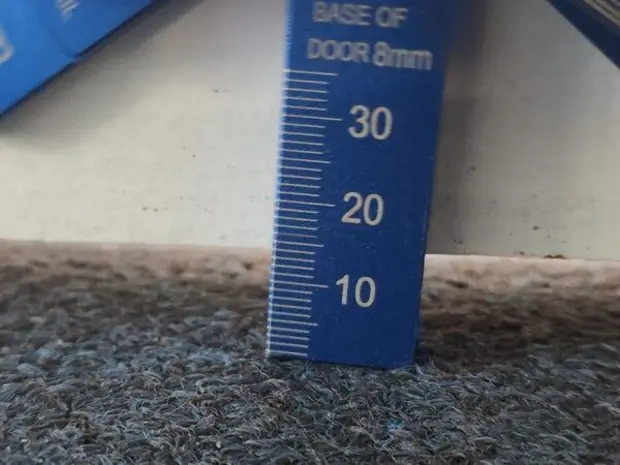
New carpet
New carpet raises the floor. The door drags, and the quickest answer is to trim the bottom. Trim too much and the door is outside what it was tested for.
If you are fitting carpet, choose a thinner underlay, or have the door rehung.
Send us the postcode and a rough door count. You will have a price the same day.
Get a price